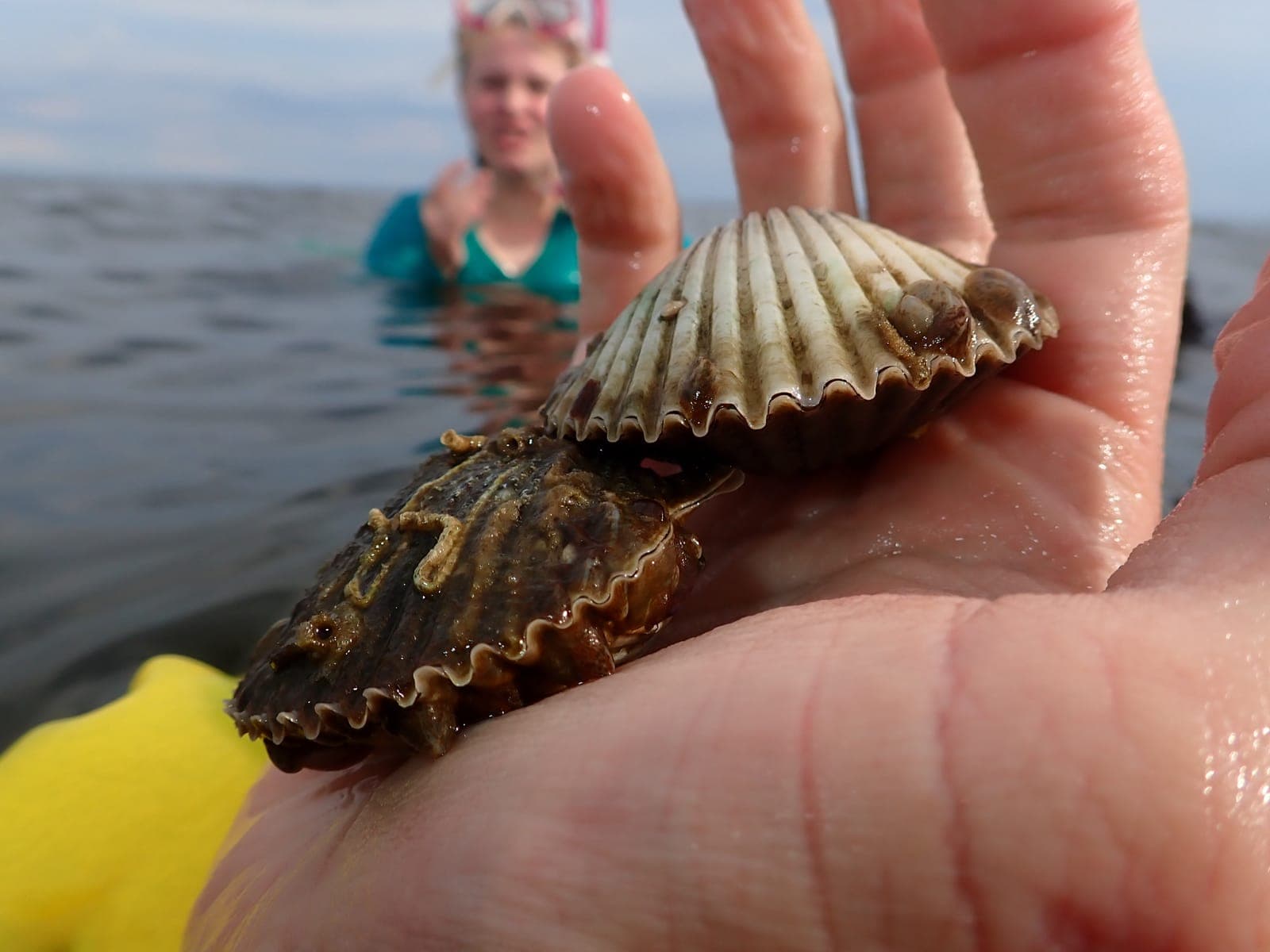
The short list: mask, snorkel, fins, a mesh bag, a divers-down flag, a life jacket for everyone, a cooler full of ice, your fishing license, sunscreen and lots of water. Going on a charter? Ask what they provide. Most of the boat safety gear is theirs.
Required by Law
- Florida saltwater fishing license for each person who needs one, or proof of an exemption (for example, a Florida driver license for residents 65 and older). You don't need one on a licensed charter boat.
- Divers-down flag, at least 20 by 24 inches on the boat with a stiffener, or at least 12 by 12 inches on a float.
- A wearable life jacket for every person aboard, the right size and within reach. Kids under 6 must wear one on boats under 26 feet while underway.
- A throwable flotation device on boats 16 feet and longer.
- Sound signal such as a whistle or air horn, and visual distress signals in good condition (boats under 16 feet need them only between sunset and sunrise).
- Boating safety education ID card and photo ID if the driver was born on or after January 1, 1988 and the boat has 10 horsepower or more.
For Catching Scallops
- Mask and snorkel that fit each person
- Fins
- Mesh catch bag for each swimmer (scallops can pinch, so don't use a pocket)
- Dip net or landing net, optional. Hands and these nets are the only legal gear.
- A bucket marked at 1 and 2 gallons, to keep count
- Gloves, optional
- A 1 to 3 mm wetsuit or a sun shirt if you get cold or burn easily
For Keeping Them Cold
- Cooler with plenty of ice
- A wet towel to lay over the ice, so meltwater stays out of the shells
- Extra mesh bag and a cleat or line to hang scallops in the water, if you'd rather do that until you head in
For You
- Drinking water, more than you think
- Hat, sunglasses and sunscreen
- Snacks or lunch
- Towels and a dry change of clothes
- Vinegar spray for stings
- First aid kit
- Phone in a waterproof case
For the Boat (DIY Trips)
- Marine VHF radio
- Fire extinguisher
- Anchor and enough line for the depth
- A chart or chartplotter. Shallow flats sit between many ramps and the scallop grounds.
- Tide times for the day
- A float plan left with someone on shore
For Cleaning
- A spoon, butter knife, or scallop or oyster knife. A sharp knife isn't needed.
- A bucket for shells and guts
- A food container with a tight lid
- Soap and clean water for washing hands
- Trash bags for shells, so they don't end up at the ramp
Leave at Home
- Rakes or any other tool for taking scallops. Only hands and dip or landing nets are legal.
- Trawls, drags, dredges, or any net other than a dip or landing net. You can't have scallops aboard a boat that carries one.