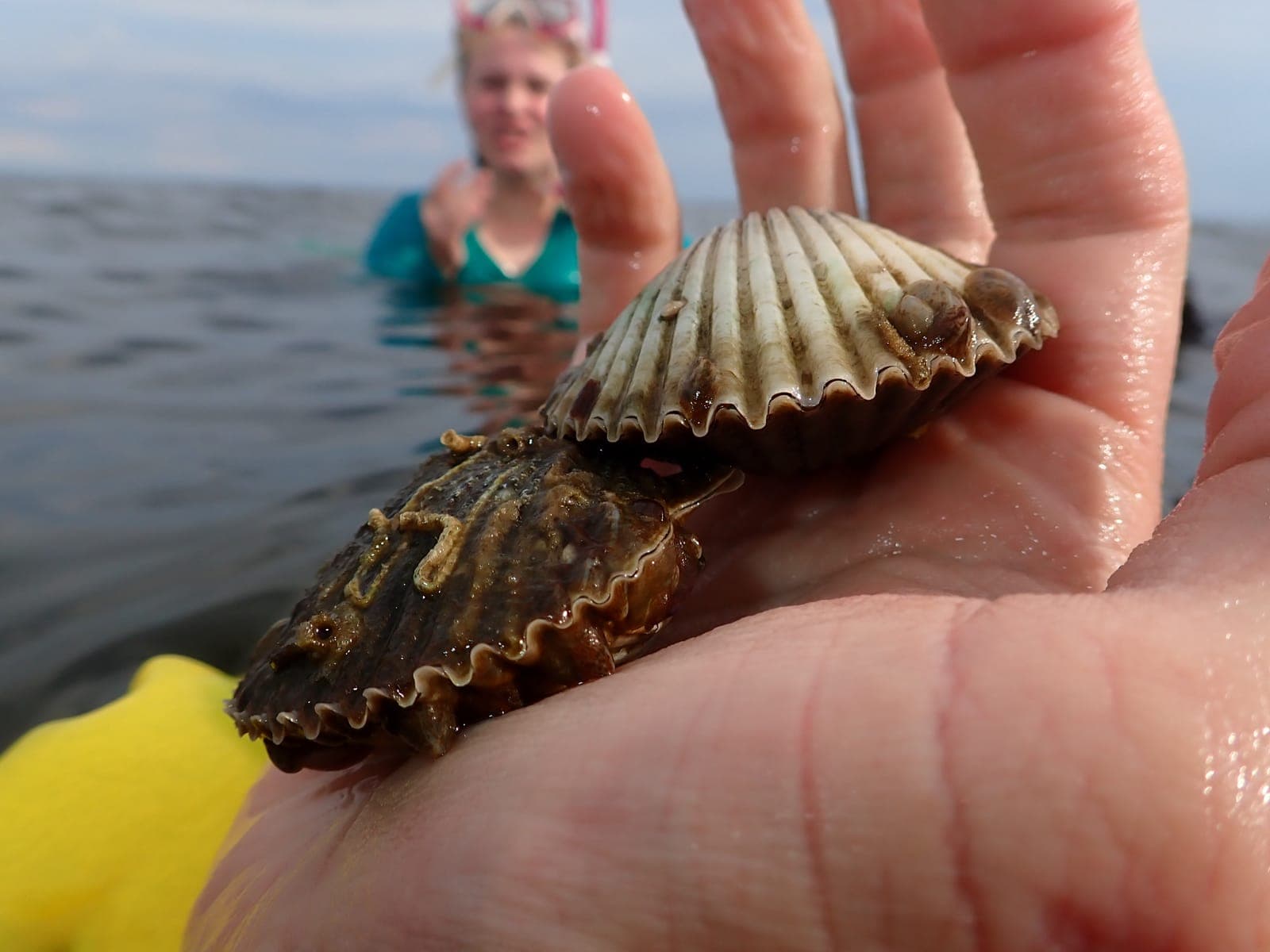
Short answer: Chill the scallops on ice until the shells start to gape. Slide a spoon or dull knife in, cut the white muscle off the top shell, scrape away everything that isn't white muscle, cut the muscle off the bottom shell, and rinse it in cool water. Keep only the white muscle.
Tools
- A spoon, butter knife, or scallop, clam or oyster knife. You don't need anything sharp.
- A bucket for shells and guts
- A food container with a tight lid
- A cooler of ice
- Soap and clean water for your hands
Step 1: Chill Them First
Put the scallops on ice and wait. Cold relaxes the muscle that holds the shell shut, so the shells open a little and are much easier to work.
- Lay a wet towel over the ice and set the scallops on top. That keeps meltwater out of the shells.
- Drain meltwater as it builds up.
- Don't hold them in a bucket of water. Ice slows bacteria; a warm bucket speeds it up.
Some people put whole scallops in a freezer for a short time to get the same effect, but we recommend ice.
Step 2: Find the Dark Shell
Each bay scallop has one darker shell and one lighter shell. Hold the scallop with the dark shell facing up.
Step 3: Open It
Work your spoon or knife between the two shells and pry them apart.
Step 4: Free the Muscle From the Top Shell
Find the round white muscle in the middle. Slide your tool along the inside of the top shell to cut the muscle loose. The scallop will open easily. Throw away the top shell.
Step 5: Remove the Guts
Hold the bottom shell and scrape everything that isn't the white muscle away from it: the dark gut, the frilly mantle with the eyes, and the orange or cream roe. Throw it all in the waste bucket. Get off as much of the soft tissue as you can.
Why it matters: the guts are where algal toxins build up, and cooking doesn't destroy those toxins. FWC advises eating only the white muscle from open zones.
Step 6: Cut the Muscle Free
Slide your tool under the muscle to free it from the bottom shell. Drop the meat into your lidded container and toss the shell.
Step 7: Rinse Cool
Rinse the meat in cool water to wash off sand and bits of gut. Warm or hot water starts to cook the meat. Don't blot the meat with paper towels, which can introduce bacteria.
Wash your hands, tools and container before, during and after.
Step 8: Store or Freeze
- Fridge: about 1 day.
- Freezer: about 3 months.
- Keep the meat on ice until it's in the fridge.
Getting Rid of Shells
Put shells and guts in the trash, or in open Gulf water with good current.
- Never dump them in channels, canals, marinas, springs, swimming areas or at boat ramps.
- Keep them out of heavily used rivers like the Homosassa and Crystal, where shell piles can hurt swimmers and damage seagrass.
- If you clean on the water, move away from people still scalloping first.
Paying Someone to Clean Them
You can pay someone to clean your scallops. Ask at the marina or ramp where cleaners work in your town. Prices change by town and by year, so ask the price per gallon before you hand over your catch. If you're booking a charter, ask whether cleaning is included.
Pick a cleaner with a handwashing station and running water. Keep your whole scallops shaded and cool while you wait, and keep the shucked meat on ice until pickup.
How Much Meat to Expect
A one-person daily limit is 2 gallons in the shell or 1 pint of meat. A pint is about four servings. Small scallops have very little meat, which is one more reason to leave them in the water.